Process
A clear path for one task or a complete technical problem.
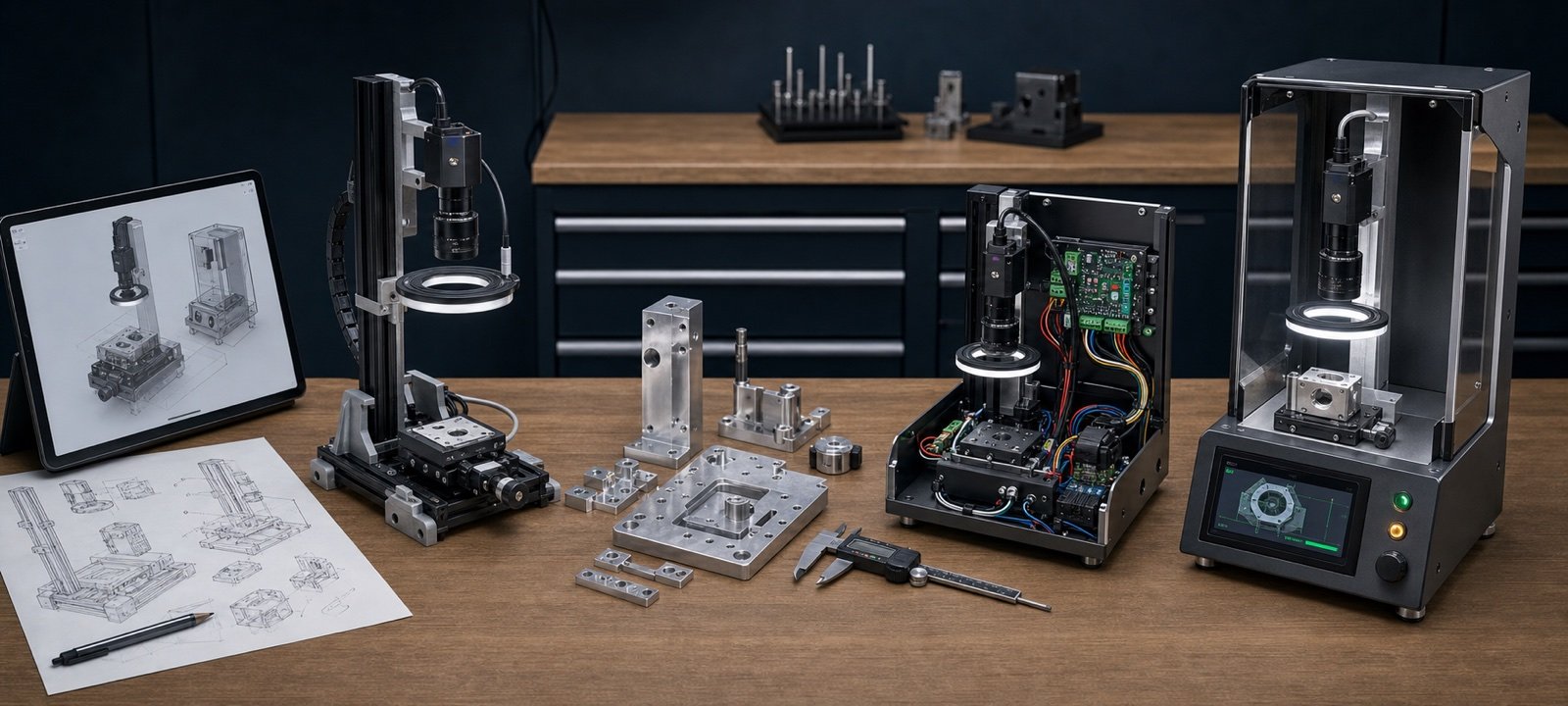
Simple projects are kept focused. Complex projects are divided into understandable decisions, testable stages, and clear review points.
How projects move
Direct communication at every meaningful decision.
If a design needs to change, you hear why. If a different process is more practical, we discuss it before work moves forward.
Describe the project
Outline the result you need, the current problem, timing, and anything already available—a sketch, photo, drawing, CAD model, sample part, wiring information, or data. Incomplete information is acceptable if the goal is clear.
Handle confidentiality
Request an ncKraft mutual NDA or propose your own agreement before sensitive technical information or files are exchanged.
Exchange information and review
ncKraft will arrange an appropriate exchange method, then review function, interfaces, geometry, materials, signals, quantities, risks, validation needs, and available processes.
Confirm scope and quote
You receive the proposed approach, assumptions, pricing, and a realistic schedule before production begins.
Design, prototype, integrate, or produce
The agreed work is completed with communication at review points that actually affect the result. Complex work may be staged so each subsystem or assumption can be tested before the next commitment.
Verify and deliver
Parts, prototypes, or integrated products and equipment are checked against the agreed acceptance criteria, documented as appropriate, and prepared for delivery.